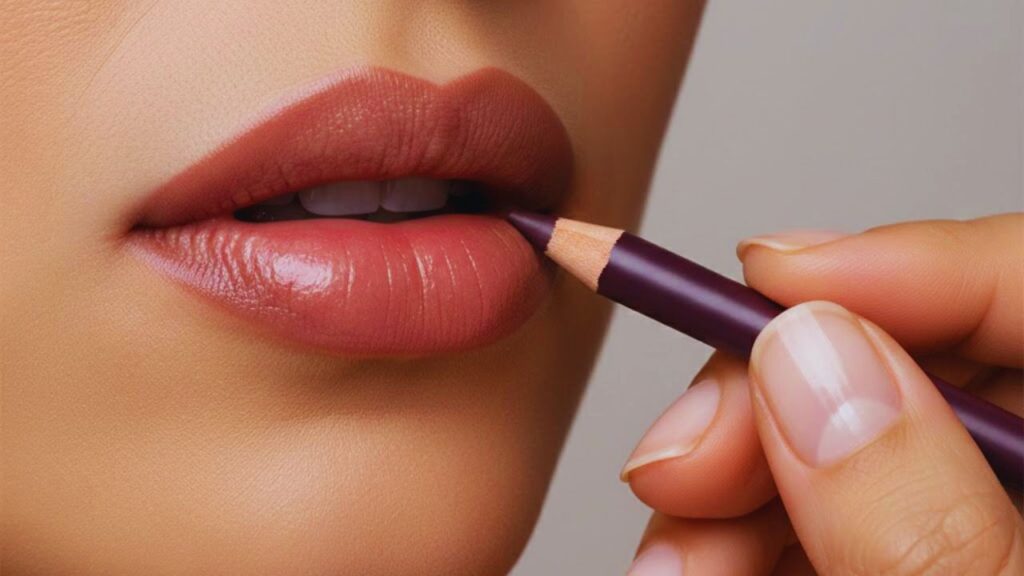
In a café bathroom a girl touches up her lipstick without knowing someone is watching. The people waiting outside see how fast she does it. She uses two quick strokes with a pencil and presses her lips together before adding some gloss. She doesn’t overdraw the edges or add heavy shading. When she lifts her head her lips look naturally soft and slightly fuller like she just came back from vacation. The result doesn’t look obvious but the difference is clear.
The Subtle Changes You Begin to Notice Over Time
Later when you stand in front of your own mirror you try to recreate the same look. You use the same pencil and the same gloss and even copy her expression. Still the outcome feels flat. Your lips look fine but not dimensional. You realize the difference isn’t the product but the placement. A tiny adjustment that is almost invisible changes everything. What seemed like a minor detail turns out to be the entire secret.
Why Modern Lip Looks Prioritise Focus Over Fullness
This technique does not aim to make lips look dramatically larger. It focuses on guiding where the eye naturally lands. Traditional lip liner rules often encourage tracing outside the lip line and blending while filling in completely. While this method once worked well in real daylight it can feel disconnected from the rest of the face. Heavy overlining may enhance lips in photos but up close it can look out of sync with natural features. The goal is to create balance rather than exaggeration. When lip liner extends too far beyond the natural border it creates a visible outline that draws attention to the makeup itself rather than the lips. This becomes especially noticeable in natural lighting conditions where shadows and textures are more visible. The disconnect happens because the artificial line does not follow the actual anatomy of the mouth.
The Evolution of Contemporary Lip Artistry
Modern makeup artists now avoid obvious changes to the face. They no longer try to make lips look dramatically larger. Instead they work with subtle techniques that bring out natural features. The fullness that people notice comes from careful product placement rather than heavy application. This approach works particularly well in selfies and video calls where lighting can be harsh and unforgiving. It also looks natural during face-to-face conversations. The transformation remains gentle but the overall effect appears polished & deliberate.
Why Precision Is Replacing Heavy, Bold Outlines
The real transformation comes from millimeters instead of thick outlines. When you see where the liner actually goes lip lining feels completely different. The goal is not to redraw your lips but to highlight their existing structure. This micro-precision keeps the result believable and softly enhanced rather than obviously drawn on.

The Strategic Placement Makeup Artists Rely On
Professional artists who share their work online tend to follow a similar approach when drawing lips. They deliberately keep the corners of the mouth soft & undefined rather than making them too sharp or obvious. Most of their attention goes to three specific spots on the lips. These are the highest point of the cupid’s bow at the top, the middle section of the bottom lip & the slightly raised areas that sit just beside the center. The outer edges stay blurry and gentle. This creates a shape that looks natural and subtle instead of harsh and overly precise.
What Makes This Look Appear So Effortless
A makeup artist in London mentioned that she applies the same budget-friendly lip pencil on all her clients but changes where she places it depending on how light falls on their lips. Many clients think she used fillers to achieve the look. She always gives them the same explanation: just a basic liner and precise application. The feedback she receives most often is that people appear well-rested. The result is not only fuller lips but also better balance and harmony with their facial features.
The Science That Explains the Visual Effect
Our eyes naturally skip around when we look at faces rather than viewing them in a steady way. They move toward areas where there is contrast and where shapes change. The small dip at the center of the upper lip and the curve in the middle of the lower lip draw our attention. The spots where light reflects off gloss also catch our eye. When you emphasize these specific points and keep the outer edges soft your brain reads the lips as being fuller. This happens without noticing a harsh line around them.