Sleep apnoea affects millions of adults in the United States by interrupting their sleep and raising health risks while reducing their energy during the day. For years the standard treatment has involved using bulky CPAP machines with face masks even though many patients struggle to use them regularly. A new oral device without masks is now changing how this condition is treated. Studies demonstrate that this device reduces breathing interruptions by 56% while offering patients a simpler and more comfortable option. This development has surprised sleep specialists and given new hope to people who previously refused or abandoned conventional treatments.
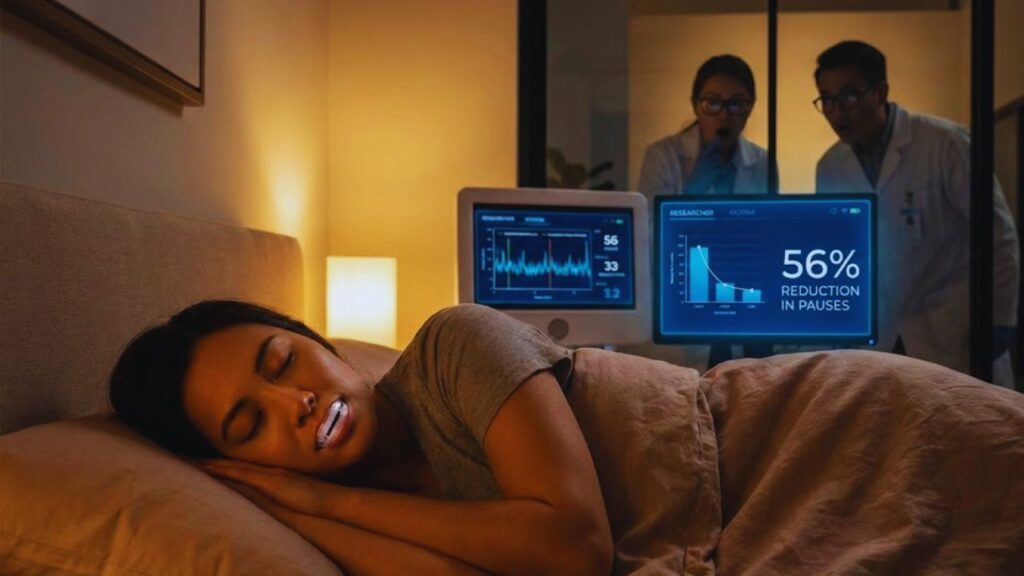
How the new sleep apnoea oral treatment works
The new oral treatment addresses sleep apnoea through a straightforward approach. The device sits inside the mouth during sleep & provides gentle stimulation to the tongue muscles to keep the airway open. It differs from conventional devices by eliminating forced air pressure and loud equipment while concentrating on natural muscle activation. Studies showed that this approach supports better muscle tone and helps sustain regular breathing patterns during the night. Users also experienced improved comfort levels since the device requires no headgear or face coverings. The treatment works by correcting the underlying physical problem and supports healthier sleep without changing how people naturally position themselves while resting.
Clinical results that surprised sleep apnoea researchers
Clinical trials showed results that were better than expected. People who used the oral device had a 56 percent reduction in breathing interruptions that matched some CPAP results. Researchers saw improved oxygen levels during sleep and people woke up less often at night. Many people also said they noticed better daytime alertness after using it for several weeks. The most impressive finding was high patient adherence because users wore the device consistently through the entire study. This mix of good results and easy use really surprised researchers.

Why mask-free sleep apnoea options matter
Mask-free solutions might change the way sleep apnoea gets treated around the world. Many patients stop their therapy because masks cause discomfort or leaks or make them feel embarrassed. This oral option eliminates those problems and provides discreet nightly use & minimal lifestyle disruption. Doctors think it could work particularly well for people with mild to moderate conditions who want simpler treatment choices. The treatment also shows promise for wider patient acceptance which matters because untreated sleep apnoea increases the risk of serious health problems like heart disease and diabetes over time.
What this breakthrough means for the future
This development marks an important change in sleep medicine. CPAP machines will still play a key role, but having more comfortable options gives patients better choices. Experts believe this moves us closer to personalized sleep therapy where people can select treatments that work best for them. Future research will look into long term effectiveness and whether more patients can benefit. If these results continue to prove successful the device might lower healthcare costs & help people feel better in their daily lives. The findings show innovation driven care that values both scientific evidence and patient comfort.
| Feature | Mask-Free Oral Device | Traditional CPAP |
|---|---|---|
| Breathing pause reduction | Up to 56% | 50–70% |
| Comfort level | High | Moderate to low |
| Noise during sleep | Silent | Audible machine noise |
| User compliance | Very high | Often inconsistent |
Frequently Asked Questions (FAQs)
1. Who can use this oral sleep apnoea treatment?
It is mainly designed for adults with mild to moderate sleep apnoea.

2. Does the device replace CPAP completely?
No, CPAP is still recommended for severe cases and specific conditions.
3. Is the treatment comfortable to wear overnight?
Most users report high comfort and easy adaptation after a short period.
4. Is this treatment already widely available?
Availability is expanding as further approvals and studies are completed.